Jonathan Downie is a conference interpreter, researcher and writer based in Edinburgh, Scotland. His PhD was at Herriot Watt University and examined stakeholder expectations of interpreters. He recently passed his viva. He tweets as @jonathanddownie.
It’s Friday morning and I should be wearing a party hat and letting off party poppers. The day before, I passed my viva (pending corrections) and got to have lunch with three of the finest minds in my field. Not bad for a day’s work. Yet why did I find myself spending most of the next day, slumped in front of my laptop, feeling absolutely flat. In fact, if it wasn’t for the duties and joys of being a dad of two (with one more on the way), I would have probably spent the day unshaven, in my pyjamas, watching youtube videos.
What on earth happened? How come achieving the goal I had been working for over four years didn’t catapult me into new flights of productivity and set me on fire to finish the two papers that have been sitting there for months?
There were probably a few things at work. The most obvious was that I had spent all my time preparing for the viva and not that much preparing for after the viva. It’s a bit like when you are expecting your first child and you read books on how children grow in utero and go to courses on labour. Then, when the time comes, the labour is over and you have a child in your arms.
That first cuddle is incredible but suddenly, when you get your baby home, you realise that from now on, you are a parent. And no book in the world can prepare you for that or adequately train you. For me the realisation that I was a dad brought both pride and excitement and unexpected fears. From having to learn how to change a nappy (especially in the meconium stage!) to finding myself checking on my son far too regularly while he slept.
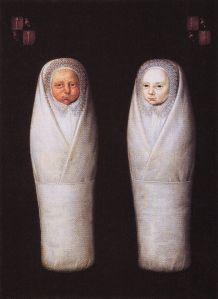
Just like learning what it means to be a dad and discovering that no two children work the same way, I now feel that I need to learn what it means to be a researcher in my discipline, knowing that no two funders, departments or universities will have exactly the same cultures and expectations. As my head of department joked, by the time I graduate, I will have 4 thesis babies (3 children and a thesis). Each of them needs to be nurtured so they will grow healthily. If I want an academic career, I am going to have to work out what “parenting” my thesis into a job actually looks like. And no amount of training, or attempts at writing grant proposals, can teach you what that is going to mean for you.
If my relative lack of awareness of what it meant to have actually finished was one reason, the inevitably imbalanced nature of life just before the viva was another. For about two weeks beforehand, I ate, drank, slept and dreamed about my thesis. I had a mock viva (an excellent idea!), read articles and blog posts, rehearsed answers, marked up my latest copy and paced the floor. For that time, I hardly did any work on other projects and my translation and interpreting clients might have forgotten I existed.
As much as that gave me confidence, I now wonder if it was also part of the problem. Sure, there were smaller projects on the go that I needed to pick up but my intense focus on viva preparation meant that they all felt distant and it almost felt like I needed to start them again. It didn’t help that I had sent in the manuscript for my first book to the publishers in the build-up to the viva too, so I lost two big projects in one go.
Rather than celebrating my achievements, all I could think was “what now?” I had no energy for working on a funding proposal and the thought of getting on with my corrections was not exactly attractive.
Due to planning that was either too good or not good enough, I was left with two voids. In retrospect, if I were to do it again, I would make sure that I had a decent-sized exciting project that was only tangentially related to my thesis that was ready for me to jump right into. That way, I would have had something big to attract my attention and keep me going.
If you want the “too long; didn’t read” version of my story, let me put it like this, “don’t let your viva create a hole in your life.” As much as it is tempting to make the thesis The Only Thing, it probably isn’t healthy, since one day it won’t be there anymore. For the sake of sanity, it is a really good idea to have a project that excites you and pulls you forward once your PhD life moves from writing and drafting, to being examined and then, to the stage I am at now, balancing corrections with the rest of life.
Passing the viva is a fantastic achievement, I just wish I had known more about the psychology of the days immediately after.
Anyone else have this experience or found incredibly useful strategies for that “post viva” feeling?
 patter
I had my viva just before the Christmas break. Group Christmas party the same afternoon. So I was perfectly happy to just chill for a while. I think planning a holiday after the viva is a good plan. Afterwards I had the energy again to go back to my Postdoc project
LikeLike
I so should have had a holiday after. I ended up taking about 2 days off but a week would have been better.
LikeLike
Reblogged this on Observations of a tired sOul..
LikeLike
I’ve been a midwife for over 20 years. NO amount of trying to support people to prepare for those first few weeks with the new baby in the antenatal period will prepare them for the postnatal period and the challenges of a newborn. The only thing they can see ahead is the huge and momentous occasion of the birth of the baby.
Likewise, no amount of reading blogs or knowing about the post-viva slump will prepare PhD candidates! Some things in life just have to be lived experiences.
Following my viva – I just felt a bit let down. It was all over in an hour – so much angst and preparation for only an hour. No hard questions or robust academic challenges – just pleasing congratulatory praise and minor changes.
Chalk it up to another lived experience, and cliché – ‘you can’t put an old head on young shoulders’.
All the best
Sue
LikeLike
It’s 2024. I passed my viva yesterday (with minor corrections) which was as surreal experience. I prepared as well as I could, marking up my thesis, rehearsing my answers to mock questions. The night before, I barely slept. When I did, I dreamed of my thesis, or saw diagrams/illustrations from it. I’ve never experienced stress like it before. But I’m proud to have survived the process.
From all of the questions I prepared, I was asked about 1. All of the others were unexpected, with the whole thing lasting 2 hours. At the end of the viva, everyone congratulated me, but I felt quite shell-shocked. It was very surreal. 24hrs on I’m asking myself, ‘What just happened?’. It ‘s very strange.
I do have some scholarship money, an internship with the university and I’ve worked, part-time as a coach throughout the whole process. I do have some structure but, I’m just cognitively tired. Not physically tired. I’ve been a bit emotional as well, a few tears today but no real reason beyond, perhaps getting through this. As a first to go to university in my family, achieving a degree was just as out of reach as going to the moon. I still can’t believe I’ve written a thesis, and survived a viva. I’m proud, but emotional.
I plan just to do some everyday stuff, that I haven’t had time to do e.g. reading non-academic books, get my fitness back on track, relax. I guess this is an adjustment period. Nobody tells you about this post-viva time, or how you’re going to feel, or that you might need support to talk through what you’ve been through. This blog has supported me to know I’ll settle, and how I am feeling is quite normal.
LikeLike
Congratulations Dr Laura. Good to take some time to find the other parts of you you’d put on hold till this was done.
LikeLike