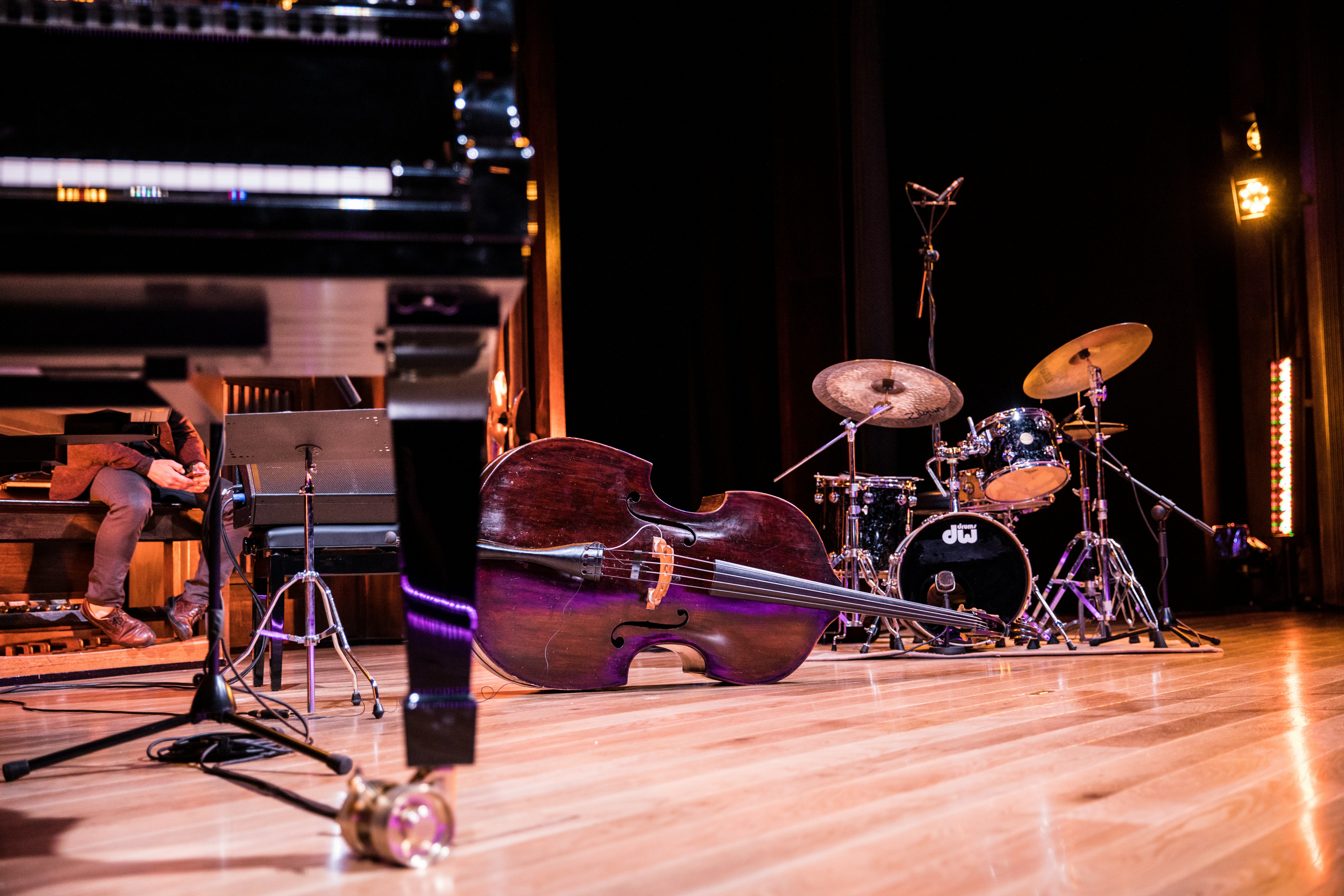
In blues, jazz, and music that traces its roots to those genres, the riff is a repeated chord progression or set of notes that ties a song together. A guitar riff returns again and again in a song as though to tell listeners where they are, even as the instruments take excursions elsewhere. The song will travel, but it will keep coming back to the riff. Thus a riff testifies to sameness within change. Riffing could also be described as change within sameness. To say that someone is riffing in writing or speech is to say that they are constructing their utterance by starting with a single idea and putting it through a series of changes, embellishing it, making it more and more elaborate and even absurd.
Emily Ogden. On Not knowing. How to love and other essays. P 48
We often sit down to write knowing roughly what we want to say but not quite knowing what we mean. There’s an idea there, something we’ve noticed or want to argue, but it hasn’t yet crystallised. It’s fuzzy at the edges. Or maybe it’s only an edge with nothing yet in the middle. The temptation in that situation is to either wait (and wait, and wait) until the idea clarifies itself – which it very rarely does on its own – or to write a sentence, decide it’s not quite right, delete it, write another, delete that too, and disappear down the inner critic’s anti-productivity death spiral. Neither of these is actually very helpful.
Riffing is a different approach. Instead of trying to nail the idea in one go, you start with whatever version of it you currently have, however approximate, however provisional. Then you put it through a series of changes. You say it one way. Then you say it another way. You zoom in on part of it. You zoom out and try to connect it to something bigger. You reach for an analogy. You push it somewhere slightly unexpected to see if it still holds. You let it become, as the quote suggests, more elaborate and even a little absurd. The point is not to arrive at the final version. The point is to keep the idea in motion until it shows you what it actually is.
What is useful about riffing as a metaphor is the idea of the riff as something you keep returning to. In a piece of music, the instruments take excursions elsewhere, but the riff comes back. It anchors you. When you are riffing in writing, you keep returning to your anchor, your riff, the idea you are trying to clarify. All the excursions away from it, all the different ways of saying and embellishing and complicating it, are in service of that return. You go out in order to come back, knowing more about where you started.
In practice, this might look like freewriting, but it isn’t quite the same thing. Freewriting is about generating without censorship, keeping the pen moving regardless of where it goes. Riffing has more direction than that. You have a home base. When you riff on an idea you’re consciously asking yourself: Can I say this differently? What’s the part of this I’m most sure about? What’s the part I’m not sure about at all? What happens if I push this to its logical extreme? What’s the opposite of this, and is the opposite also interesting? These are questions that keep pulling you back to the idea even as they move you around it.
So imagine a writer who is stuck. She opens a new document and writes ‘What I’m trying to say is’ at the top of the page and then just keeps finishing that sentence, over and over, in as many different ways as she can. What I’m trying to say is that universities do X. What I’m trying to say is that the problem with X is Y. What I’m trying to say is something more like… She fills the page. And somewhere in there, usually, is the sentence that is actually doing the work. The one where she finally hears herself saying the thing she meant. That’s riffing. The repeated phrase is the riff. Each completion of the sentence is an excursion. And she keeps returning until she finds what she was looking for.
You can do the same with a whole paragraph rather than a sentence. Write the paragraph as best you can. Then write it again, from scratch, without looking at the first version. Write it a third time. You’ll find that something shifts between the first and second attempt, and something else shifts again by the third. What you’re doing is putting the same idea through different versions of itself. The parts that keep showing up across all three versions are probably the parts that are essential. The parts that drop away were probably scaffolding. They were necessary to get you to the idea, but not part of the idea itself.
Of course there’s a question about when to riff. Riffing is a tool for clarifying, which means it’s most useful in the early stages of writing something, or at the points where you get stuck in the middle. It’s not a revision strategy. Once you have a clear argument, going back over it and saying it in seventeen different ways is not necessary. The riffing happens before you know what you’re saying. The revising and refining happen after. They are different activities and they need to be kept apart.
But look back at the ‘even absurd’ in the opening quote. Sometimes the most clarifying move is to overstate your idea wildly, to follow it to a conclusion that is obviously too much. This sounds counterproductive .Why go somewhere wrong on purpose? Ah, but it can be remarkably useful. When you push an idea past the point where it holds, you often discover exactly where it stops holding, which turns out to be very precise information about what the idea actually is and isn’t. An absurd version shows you the boundary. And knowing where the boundary is helps you understand what is on the inside.
The quote says that a riff testifies to sameness within change, and also to change within sameness. This double movement is exactly what writing-to-clarify feels like from the inside. The idea stays the same, it’s your idea, the thing you’re working on. Yet it keeps changing as you circle it and turn it and say it differently. By the time you’ve finished riffing, you haven’t arrived somewhere entirely new. You’ve arrived at a clearer version of where you started. Which, when you’re a writer trying to get to grips with what you actually mean, is exactly where you need to get to.
Photo by Dolo Iglesias on Unsplash
 patter